Blood in stool is a symptom that often causes anxiety, and understandably so. While it can be due to relatively benign conditions such as haemorrhoids or anal fissures, it should never be dismissed without proper evaluation. In some cases, it may be an early warning sign of underlying colorectal conditions that require timely investigation and treatment. The key challenge for patients is that the source of bleeding is not always obvious, and symptoms alone are not enough to determine the cause.
This is where a colonoscopy Singapore plays an important role. It remains the most direct and accurate method for identifying the source of bleeding within the colon and rectum. Through a simple yet thorough examination, doctors can visually assess the bowel lining, detect abnormalities such as polyps or inflammation, and take biopsies when necessary. For patients seeking assessment, a colonoscopy clinic in Singapore provides access to both diagnostic clarity and early intervention, ensuring that potentially serious conditions are not missed.
What Blood in Stool May Look Like and What It Can Mean
Blood in stool can present in different ways, and the appearance often provides clues about where the bleeding may be coming from. Bright red blood is usually noticed on toilet paper or coating the stool and is commonly associated with lower rectal causes such as haemorrhoids or anal fissures.
However, when blood appears darker or is mixed within the stool, it may suggest bleeding from higher up in the colon. In some cases, stools may appear black and tarry, which can indicate digested blood and a source even further up the gastrointestinal tract.
While these patterns can help guide clinical suspicion, they are not reliable enough to confirm the exact cause on their own. Many conditions can overlap in presentation, and more serious pathology may occasionally present with minimal or intermittent bleeding.
This is why symptoms alone should not be used for self-diagnosis. When there is uncertainty, a colonoscopy Singapore is often recommended to directly visualise the bowel and accurately identify the source of bleeding, ensuring that no significant underlying condition is missed.
Common Benign Causes of Blood in Stool
Not all cases of blood in stool are due to serious disease, and in fact, many are caused by benign and easily treatable conditions. Some of the most common include:
- Haemorrhoids – Swollen blood vessels in the rectum or anus that may bleed during bowel movements, especially with straining.
- Anal fissures – Small tears in the anal lining, often caused by passing hard stools or constipation.
- Constipation-related trauma – Straining or passing hard stools can irritate the anal canal and lead to minor bleeding.
- Mild rectal irritation or inflammation – Sometimes due to dietary changes or temporary bowel upset.
In Singapore, lifestyle factors such as low fibre intake, inadequate hydration, and sedentary habits can contribute to these conditions.
When Blood in Stool Becomes a Red Flag
While many cases of blood in stool are benign, certain features should raise concern and prompt further evaluation. The context in which bleeding occurs is just as important as the bleeding itself, and accompanying symptoms can provide important warning signs.
You should seek medical assessment if any of the following are present:
- Persistent or recurrent bleeding rather than a one-off episode
- Blood mixed within the stool, rather than only on toilet paper or surface
- Change in bowel habits, such as new constipation, diarrhoea, or narrower stools
- Unexplained weight loss or loss of appetite
- Fatigue or symptoms of anaemia, such as dizziness or shortness of breath
- Family history of colorectal cancer or colon polyps
Why Colonoscopy is the Gold Standard in Singapore
When investigating blood in stool, colonoscopy remains the most reliable and comprehensive diagnostic tool available. Unlike stool tests or imaging scans, it allows direct visualisation of the entire colon and rectum in real time, making it possible to accurately identify the exact source of bleeding.
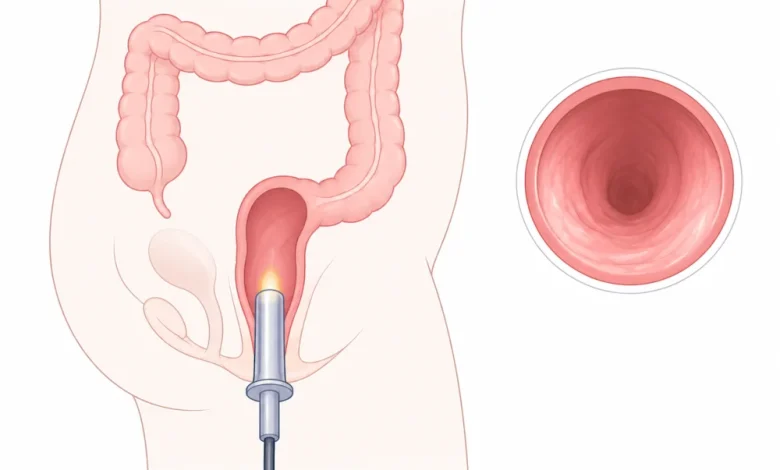
During a colonoscopy Singapore, a thin flexible camera is gently inserted into the colon. This enables the doctor to examine the bowel lining in detail, detect abnormalities such as polyps, inflammation, diverticular disease, or tumours, and take biopsies if needed.
In many cases, small polyps can even be removed during the same procedure, making colonoscopy both diagnostic and therapeutic. Another key advantage is its high accuracy. Stool tests may indicate the possibility of bleeding or abnormal cells, but they cannot pinpoint the cause. Imaging studies, while useful in certain situations, may also miss small or early lesions.
What to Expect During a Colonoscopy Procedure
For many patients, the idea of a colonoscopy can feel intimidating, but the procedure is generally well tolerated and straightforward when properly prepared. The colonoscopy process typically involves the following steps:
- Bowel preparation (1 day before the procedure)
Patients follow a clear liquid diet and take prescribed laxatives to thoroughly empty the bowel. A clean colon is essential for accurate examination. - Admission and preparation on the day of procedure
Upon arrival, patients are reviewed and prepared for sedation. Vital signs are checked to ensure safety before the procedure begins. - Sedation for comfort
Most patients are given sedation to ensure they are relaxed and comfortable, with minimal to no awareness during the procedure. - The colonoscopy procedure itself
A thin, flexible camera is gently inserted through the rectum to examine the entire colon. The procedure typically takes about 20 to 45 minutes depending on findings. - Recovery after the procedure
Patients are monitored until the sedation wears off. Mild bloating may occur temporarily due to air introduced during the examination, but this usually resolves quickly.
Most patients are able to return home on the same day, and recovery is generally smooth with minimal downtime.
Colonoscopy Singapore Cost Overview
The cost of a colonoscopy Singapore can vary depending on several factors, including the complexity of the procedure, type of sedation used, whether biopsies or polyp removal are required, and whether it is performed in a private or public setting.
In general, patients in private practice can expect a typical range of approximately SGD $1,000 to $3,000 or more. The lower end usually applies to straightforward diagnostic procedures, while costs increase if additional interventions such as polyp removal or histology tests are needed.
Conclusion
Blood in stool is a symptom that should always be taken seriously, even though many cases are due to benign conditions such as haemorrhoids or minor anal tears. The important point is not to ignore or delay evaluation, especially when the bleeding is persistent or associated with other changes in bowel habits.
If you are experiencing blood in stool or would like a proper assessment, you may arrange a consultation with our specialist, at:
Colonoscopy Doctor – Dr Aaron Poh | Colorectal Surgeon Singapore
3 Mount Elizabeth, #14-06a, Singapore 228510
Phone: +65 8875 0080