
Achilles Tears Singapore: Why Some Patients Are Missed in Primary Care and Present Late to Surgeons

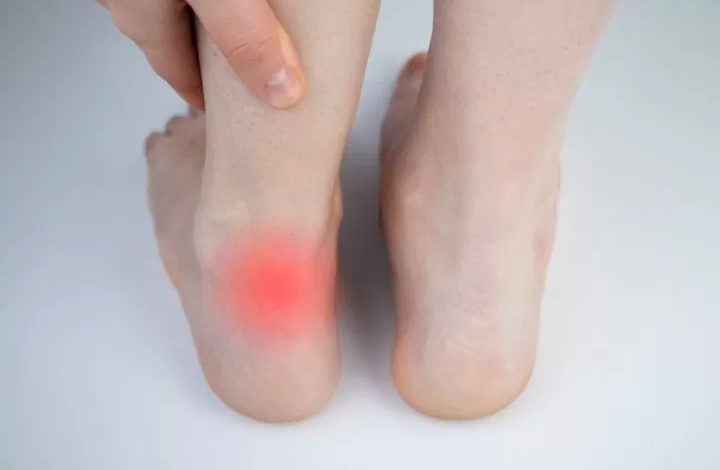
A patient may present to clinic weeks after being told they had a simple “calf strain,” only to later be diagnosed with a complete Achilles tendon rupture. This is a scenario not uncommon in achilles tears Singapore, where early symptoms can be subtle and easily mistaken for benign muscle injuries or overuse strain. In many cases, the injury is initially self-managed or assessed in primary care without a focused musculoskeletal examination, leading to a delay in specialist referral.
However, timing is critical in tendon injuries, the longer a rupture goes unrecognised, the more the tendon retracts and the more complex subsequent treatment becomes. Early missed diagnosis can therefore significantly affect surgical planning, rehabilitation duration, and overall functional recovery in patients with achilles tears Singapore.
Why Achilles Tears are Initially Misdiagnosed
Achilles tendon injuries are frequently mistaken for simple calf strains, particularly in the early phase when pain, swelling, and bruising dominate the clinical picture. In many cases of achilles tears Singapore, patients report a sudden “pop” or sharp pain during sports or daily activity, but are still able to walk with some discomfort. This residual function can be misleading and creates a false sense of reassurance that the injury is minor rather than a structural tendon rupture.
Another reason for misdiagnosis is symptom overlap. Calf muscle strains and partial Achilles tears can both present with posterior lower leg pain, tightness, and difficulty pushing off during walking. Without a targeted examination focusing on tendon integrity, the distinction may not be immediately obvious. In addition, swelling and hematoma formation in the acute phase can obscure the classic signs of a tendon defect, further complicating early recognition.
In busy primary care settings, the injury may be assessed quickly, especially if the patient retains some ability to bear weight. Without specific functional testing or suspicion of tendon rupture, the condition may be labelled conservatively as a soft tissue strain. This is one of the key reasons why some cases of achilles tears Singapore only become apparent when symptoms fail to improve or functional weakness becomes more pronounced over time.
Subtle Clinical Signs That Are Often Overlooked
In early cases of achilles tears Singapore, key clinical signs may be missed without a focused orthopaedic examination. Patients can still walk, which often masks the severity of the injury, but specific functional deficits are present on closer assessment.
Common overlooked findings include:
- Reduced plantarflexion strength, especially during push-off
- Asymmetry in resting foot position compared to the opposite side
- Palpable tendon gap, which may be hidden by swelling or hematoma
- Positive Thompson test, if performed correctly in a prone, relaxed position
These signs require deliberate side-to-side comparison and structured testing. Without them, Achilles rupture can easily be mistaken for a simple calf strain in the early stage.
Limitations Of Initial Primary Care Assessment
In many cases of achilles tears Singapore, the initial consultation in primary care is focused on ruling out common soft tissue injuries rather than confirming a tendon rupture. This can lead to incomplete assessment of functional deficits, especially when the patient is still able to walk or bear weight.
Time constraints during consultation often limit the depth of musculoskeletal examination. Specific tests such as the Thompson test may not be performed, or may be interpreted without optimal positioning and comparison. In addition, early swelling and pain can make it difficult to identify tendon discontinuity on physical examination alone.
Imaging tests are also not always immediately requested if a calf strain is presumed. Ultrasound or MRI, which can confirm tendon integrity and measure the gap in a rupture, may only be arranged when symptoms fail to improve.
Consequences Of Delayed Presentation To Orthopaedic Surgeons
Delayed recognition of achilles tears Singapore can significantly change both treatment options and expected outcomes. When a rupture is left untreated for weeks, the tendon ends begin to retract and scar tissue forms, making direct repair more challenging.
Key consequences include:
- Increased tendon gap due to proximal retraction
- Loss of tendon quality, complicating primary repair
- Higher likelihood of requiring reconstruction instead of simple repair
- Prolonged immobilisation and slower rehabilitation
- Reduced calf strength and push-off power after recovery
- Increased risk of re-rupture compared to early treatment
From a surgical perspective, delayed cases often require more complex planning and longer recovery protocols, which can impact return to sport or pre-injury activity levels.
How Orthopaedic Surgeons Evaluate Late-Presenting Achilles Tears
In delayed cases of achilles tears Singapore, assessment shifts from confirming rupture to understanding tendon quality, gap size, and functional deficit. A detailed clinical examination remains the foundation, focusing on calf muscle atrophy, weakness in plantarflexion, and gait abnormalities such as reduced push-off strength.
Imaging plays a key role in late presentations:
- Ultrasound is often used for dynamic assessment of tendon continuity
- MRI provides detailed evaluation of tendon retraction, scarring, and muscle degeneration
- Measurement of the tendon gap helps guide whether repair or reconstruction is required
Functional assessment is also important. Surgeons evaluate single-leg heel raise ability, calf endurance, and overall limb symmetry.
Conclusion
Early and accurate recognition of achilles tears Singapore plays a crucial role in preventing delayed treatment and more complex recovery pathways. While initial symptoms can resemble a simple calf strain, careful assessment and timely investigation help ensure the injury is identified before tendon retraction and muscle weakening occur.
This ultimately supports more effective treatment planning and better functional recovery. For consultation or further assessment, you may contact our clinic at:
Cove Orthopaedic Clinic (Mount Elizabeth Orchard) | Sports Orthopaedic Surgeon Singapore
3 Mount Elizabeth, #14-13 Medical Centre, Singapore 228510 | +65 9631 7637


